
A Victory Built by Workers: Equidem Welcomes ILO Convention No. 193
A Victory Built by Workers
Every generation of workers has had to confront a new language invented to deny an old truth: work is work, control is control, and those who profit from labour must be accountable for the conditions under which it is performed.
For garment workers, global fashion brands have long relied on the language of the “independent supplier” to distance themselves from responsibility for conditions in their supply chains. In the case of migrant workers, large corporations often shift responsibility onto recruitment agencies, labour contractors, and subcontractors. Platform companies follow a similar model: they describe themselves as technology providers or intermediaries while classifying workers as “independent contractors” rather than employees.
The terms used differ across sectors, but the underlying strategy is the same. Employment relationships are fragmented and obscured so that the corporation exercising economic control is legally separated from the worker. This deliberate fissuring of the employment relationship allows companies to avoid or limit employer obligations while transferring business risks, including unstable income, recruitment costs, social protection and occupational safety, onto workers.
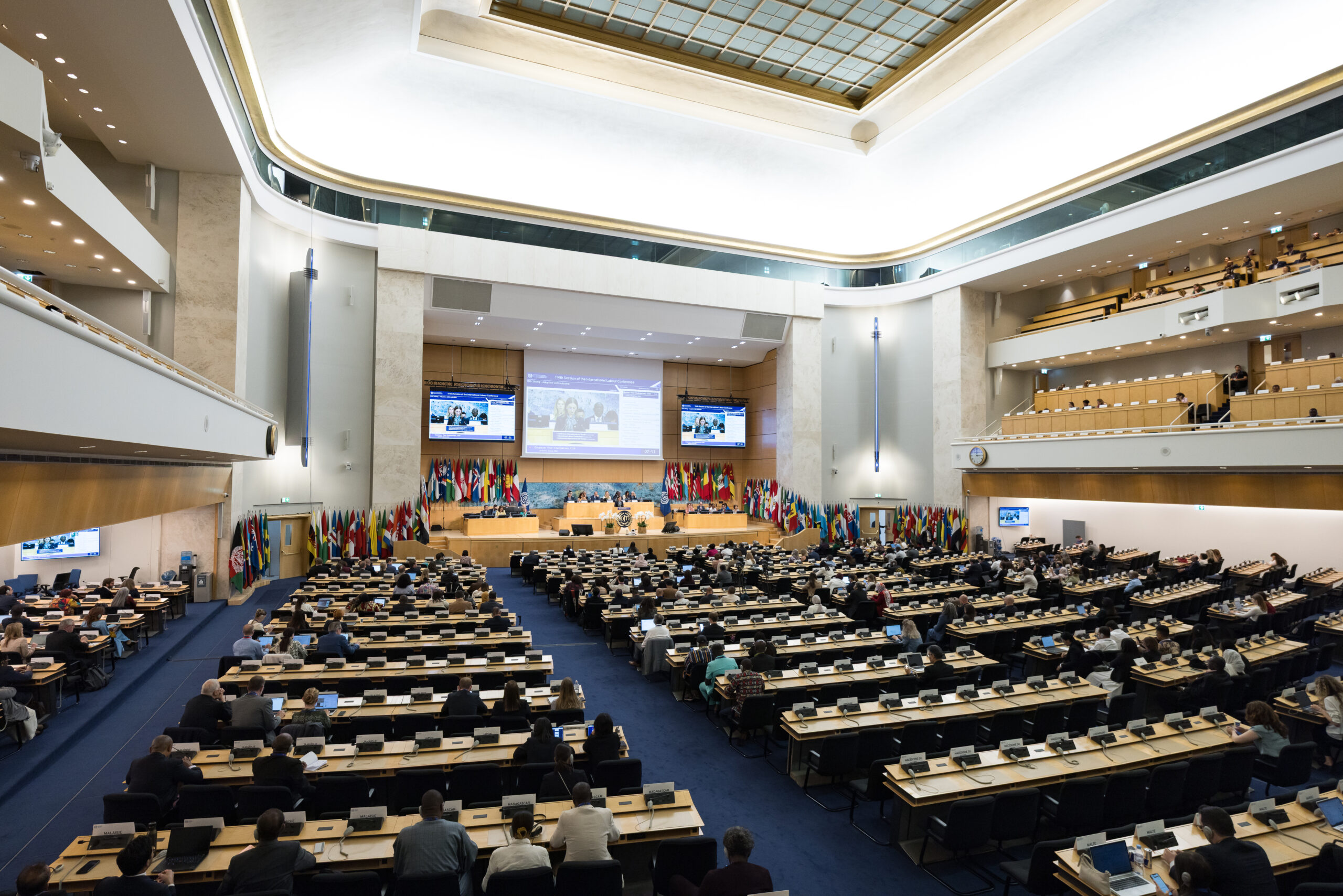
In June 2026, platform workers won an important victory against that model. The International Labour Conference adopted the Decent Work in the Platform Economy Convention, 2026 (No. 193), the first binding international labour standard dedicated to platform work. The Convention recognises that companies cannot claim that they are merely technology providers, to evade labour rights for their workers, and that technological innovation cannot be built on the erosion of employer responsibility.
One Small Part of a Global Struggle
This victory belongs first to platform workers themselves: delivery riders navigating dangerous roads, drivers working through the night, domestic and care workers entering private homes, data workers training artificial intelligence, content moderators carrying the psychological costs of keeping digital spaces usable, and many others hidden behind the ease of a screen. Their organising, often without legal recognition, stable income or protection from retaliation, made this Convention possible.
Equidem is proud to have played a part in this larger struggle. Through landmark worker-led investigations into the labour systems underpinning Meta, OpenAI, Deliveroo, HungerStation and other major platforms, we exposed how outsourcing, opaque algorithmic management and fragmented contracting place workers at risk of psychological harm, forced labour, wage theft, retaliation and unsafe working conditions. By placing workers’ testimony and rigorous legal analysis into the public record, these investigations prompted some of the world’s most powerful technology and platform companies to respond to the allegations.
As co-secretariat of the Global Platform Workers Solidarity Project, we helped bring workers, trade unions and civil society organisations together in Nairobi to exchange experiences, develop shared demands and prepare for the International Labour Conference negotiations. We also worked alongside global trade union bodies, including the International Trade Union Confederation (ITUC), the International Transport Workers’ Federation (ITF), Women in Informal Employment: Globalizing and Organizing (WIEGO), and other worker organisations, to ensure that evidence from workers’ experiences informed advocacy, engagement with companies and the development of international labour standards.
We congratulate every worker, organiser, trade union, civil society organisation and ally who contributed to this achievement, especially those who shared their experiences at great personal risk, those who travelled across borders to organise collectively, and those who could not be physically present but continued the struggle in their workplaces and communities. Equidem is honoured to have been one small pebble in this long and collective movement for dignity, recognition and justice in the platform economy.
Why Convention No. 193 Matters
This collective struggle has achieved more than formal recognition of platform workers and the injustices they face. Convention No.193 establishes an international framework for confronting the structures through which platform companies exercise significant control over workers while seeking to avoid the responsibilities of an employer.
The Convention recognises that a worker’s employment status must be determined by the reality of the working relationship, rather than simply by the label used in a contract. It requires governments to look at the facts of how the work is performed and remunerated when determining whether an employment relationship exists. Platform companies therefore cannot avoid their obligations merely by classifying workers as “independent contractors” or presenting themselves as technology providers or intermediaries. Where a platform controls access to work, determines or influences pay, monitors performance, imposes targets, or disciplines workers through suspension and deactivation, these realities must be considered when determining the company’s responsibilities towards workers.
This is particularly important for migrant and outsourced workers. Platform companies frequently operate through recruitment agencies, labour suppliers and third-party logistics companies, creating layers of separation between the worker and the corporation that ultimately benefits from and controls the work. Convention No. 193 requires governments to clarify how responsibilities are distributed between platforms and intermediaries, making it harder for each actor to deny accountability by pointing to another part of the contracting chain.
The Convention also creates the first binding international labour standards addressing algorithmic management. Workers and their representatives must be able to understand how automated systems monitor performance, allocate work, influence pay, and make decisions that affect livelihoods. Workers must also have access to explanations and meaningful human review when they face non-payment, suspension, deactivation, or termination.
Alongside these protections, the Convention addresses occupational safety and health, personal data, transparent and timely payment, freedom of association and collective bargaining. Together, these provisions affirm a fundamental principle: technology may change how work is organised, but it cannot be allowed to diminish the rights, dignity or protections owed to the people who perform it.
From Adoption to Implementation
The adoption of Convention No. 193 is a historic achievement, but its promise will be realised only through implementation. Governments must now move swiftly to ratify the Convention and translate its principles into strong, enforceable national laws. Those laws must address misclassification, clarify responsibility across platforms and labour intermediaries, protect workers from unfair deactivation and wage theft, strengthen occupational safety and health, and ensure that migrant and outsourced workers are not excluded from protection.
Workers and their organisations must be at the centre of this process. They should have a meaningful role in shaping legislation, enforcement systems, wage standards, data protections, and rules governing algorithmic management.
Platform companies should also not wait for governments to act. They must begin aligning their practices with the Convention by making pay systems transparent, providing meaningful human review of automated decisions, respecting freedom of association and collective bargaining, and accepting responsibility throughout recruitment, contracting and subcontracting chains. Investors must also examine whether the business models they support depend on shifting commercial risks and employment obligations onto workers.
Equidem will continue to support this process alongside workers, trade unions and civil society partners. We will contribute evidence from worker-led research, support engagement with governments and companies, help identify gaps between international standards and workers’ everyday realities, and strengthen cross-border collaboration among platform workers and their organisations. We will also continue documenting abuses, amplifying workers’ demands and advocating for implementation that includes those most likely to be overlooked, particularly migrant, outsourced and otherwise marginalised workers.
A New Phase of Hope
Convention No. 193 opens the possibility of a new phase in which workers do not have to fight simply to be recognised, but can work alongside governments, employers, trade unions and civil society to build a platform economy grounded in dignity, fairness and shared responsibility.
Labour history gives us reason for hope. Rights that are now taken for granted – from limits on working hours and the weekend to occupational safety and collective bargaining – were won because workers organised and demanded that the economy be structured differently.
Platform workers are carrying that history forward. At a time when artificial intelligence, algorithmic management and platform business models are expanding with limited accountability, the Convention provides an essential international standard from which change can begin. There is still much work ahead, but the platform economy is sustained by human beings, and its future must be shaped by the workers who make it possible.


