A Moment for Hope, A Moment for Workers
There are moments in history when everything familiar seems to come undone. And then there are moments when, from the fractures of that disorder, new forms of courage, solidarity and collective power begin to emerge.
We are living through both.
Across continents, people who labour for a living are confronting pressures that are no longer exceptional, but part of daily life. From Ghana to Pakistan to the United States, wars and geopolitical shocks are driving up the cost of fuel, food and basic necessities. A warming planet is making labour more dangerous for those in factories, farms, warehouses, kitchens and on delivery routes. Public health emergencies, from Ebola to future pandemics we may not yet be prepared for, continue to expose the fragility of healthcare and social protection systems.
What often appear in policy debates as separate crises – inflation, debt, austerity, climate breakdown, technological disruption and corporate impunity – are converging on the same people: those whose labour keeps economies alive, but whose lives are treated as expendable.
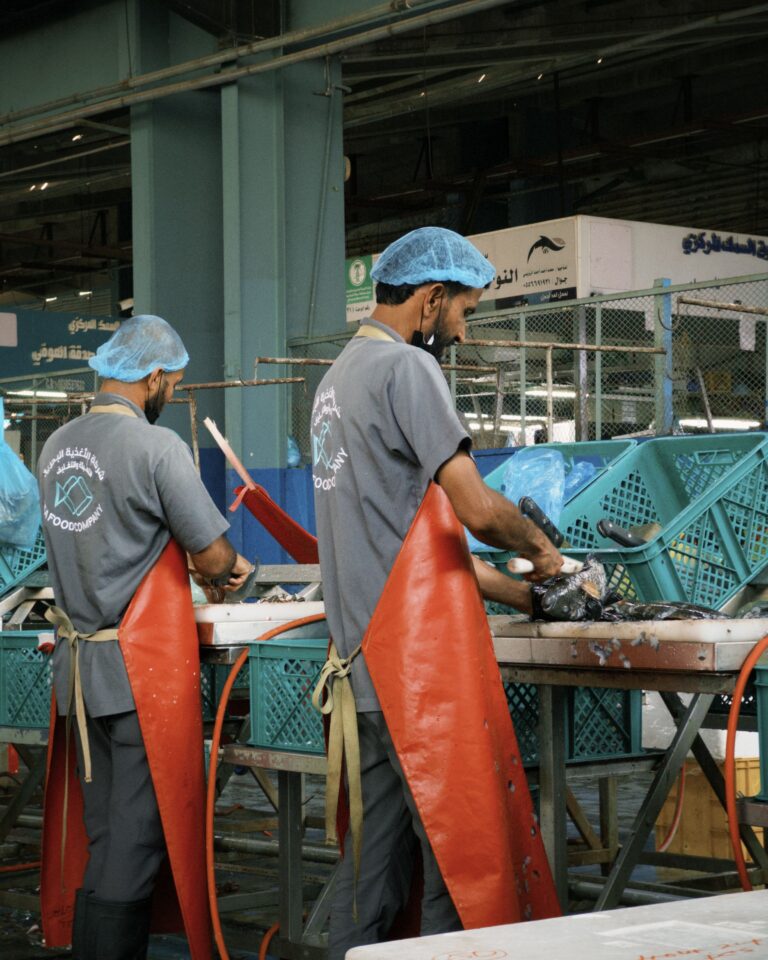
A garment worker, a delivery rider, a migrant driver, a tech worker, a warehouse worker and a content moderator may appear to occupy very different workplaces. But each is caught in the same machinery of extraction, where wealth is produced by the many and captured by the few.
When fuel prices rise, delivery riders are expected to absorb the costs. When temperatures climb, garment workers are expected to keep producing in extreme heat. When rents increase, tech workers are expected to survive on stagnant wages. When algorithms intensify the pace of work, warehouse workers are expected to move faster, lift more and endure longer shifts. When violent or traumatic content floods digital platforms, content moderators are expected to protect the internet at the expense of their own mental health.
At every turn, the cost of crisis is transferred downward – from companies to workers, from capital to labour, from those with power to those with the least protection.
This is the reality of labour today. Workers are not merely enduring hardship. They are being made to underwrite profit through their bodies, time, debt, exhaustion and risk, while the world’s richest men buy yachts, build private rockets and turn even space into another playground for wealth.
Workers are refusing despair
And yet, everywhere we look, workers are refusing despair.
They are organising. They are striking. They are building collective power across sectors, borders and forms of employment. They are insisting that the future of work cannot be decided without them.
In just the past few weeks, we have seen workers’ struggles unfold in different parts of the world:
- In Noida, India, around 40,000 workers, many of them garment workers, joined protests demanding better wages and safer working conditions. Their mobilisation forced one of India’s most industrialised states to respond, with Uttar Pradesh raising minimum wages after days of unrest in the industrial hub.
- In Kenya, public transport workers and operators called for a nationwide strike after a sharp rise in fuel prices. The protests were met with violence: at least four people were killed, more than 30 were injured and hundreds were arrested.
- In South Korea, Samsung Electronics workers are using strike action to push back against unfair bonus payments, reminding the world that even at the centre of the AI economy, labour remains indispensable and that workers will not quietly accept exclusion from the wealth they generate.
- In Italy’s luxury fashion sector, trade unions reported 70% to 100% participation in a one-day strike across Kering facilities, as workers protested planned job cuts and demanded transparency over the company’s restructuring plans.
These examples are in no way a comprehensive list. They are only some of the struggles that have reached us in recent weeks. Many more are taking place beyond the media spotlight, in factories, depots, warehouses, digital platforms and supply chains across the world.
These struggles are not separate and isolated events, but are connected by a single question: what kind of world of work are we all willing to accept? And more importantly: what kind of future are we creating for workers everywhere?
This was the spirit that also guided our conversations in Kenya, where Equidem and the Interfaith Center on Corporate Responsibility(ICCR) brought together platform workers from across the Global Majority as part of the Global Platform Workers Solidarity Project. In that room, workers who are too often treated as underpaid and expendable – riders, content moderators, care workers and others – came together as organisers, strategists and leaders.
They spoke not only of exploitation, but of possibility: of a future in which all workers are recognised, protected, able to organise without fear and included in shaping the rules that govern their lives. They shared experiences across borders, built common demands and asked what it would take for international institutions to respond honestly to the realities of work today.
Building evidence, power and participation
This is also the context in which Equidem’s broader work sits today: not as a substitute for worker organising, but as one contribution to the broader infrastructure needed to confront global corporate power.
Our research, developed in collaboration with workers and unions, documents labour exploitation behind everyday products and services, from the digital platforms we use to the clothes we wear. By making this evidence public, we seek to ensure that companies, investors, governments and international institutions cannot claim ignorance about the conditions on which global supply chains and the digital economy depend.
A central part of this work is also creating opportunities for workers to be centred in the discussions that shape their lives. Through the Global Platform Workers Solidarity Project, and now through our support for worker leaders participating in the International Labour Conference, Equidem is working alongside workers and the wider labour movement to help ensure that their experiences and demands are carried from the frontlines of struggle into policy and institutional spaces.
A moment for institutions to rise
The question now is whether international institutions will respond to this moment with the seriousness it demands.
Worker action across countries should be understood as more than protest — it is a call to rebuild the foundations of labour justice for a global economy increasingly shaped by technology, outsourcing and concentrated corporate power. At a time when workers are rising, institutions must rise with them — not as distant forums of negotiation, but as instruments of justice for the people whose labour sustains the world.
There are reasons to believe this is possible. In May 2026, the International Court of Justice affirmed that the right to strike is protected under ILO Convention No. 87 on freedom of association. This matters because the right to organise means little if workers are denied the collective power to withdraw their labour when negotiations fail. The right to strike is the right of working people to say no: to poverty wages, unsafe work, algorithmic control and being treated as disposable.
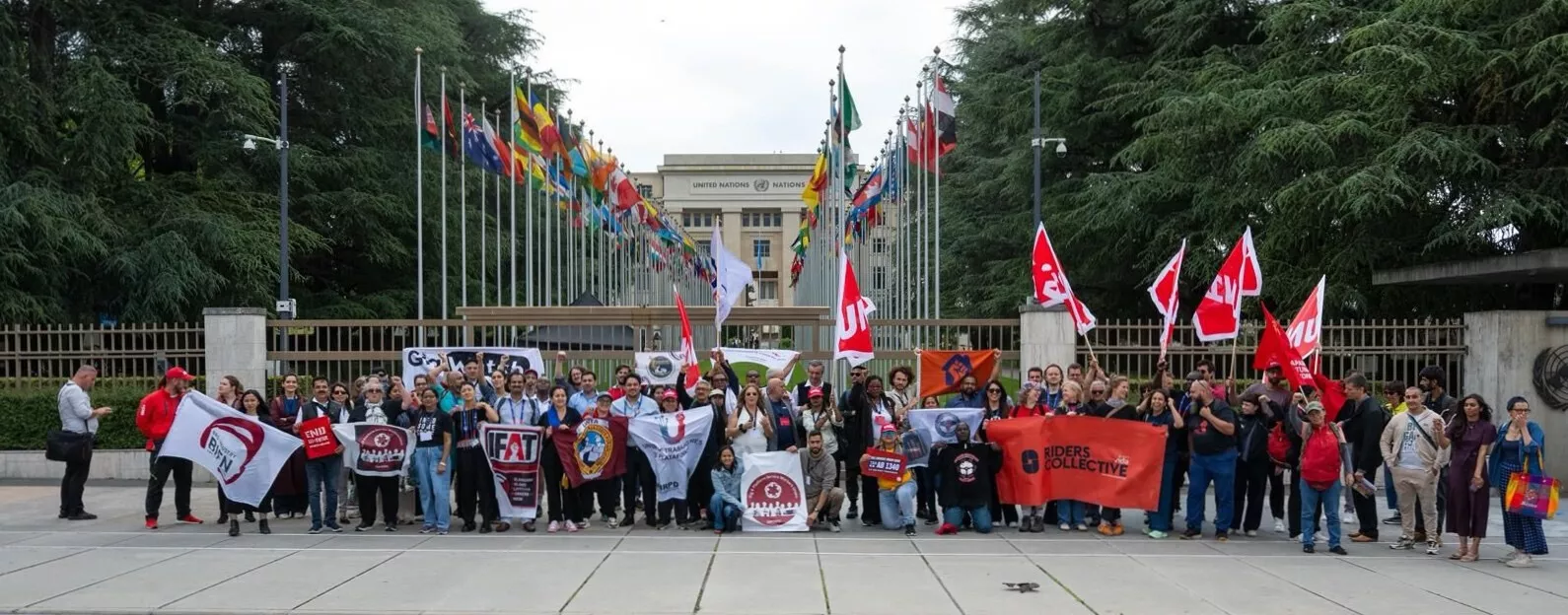
That is also why the International Labour Conference starting today matters. As governments, employers and workers gather in Geneva to discuss a possible new international standard on platform work, the question before them is larger than apps, data or consumer convenience. At its heart, the platform work debate is about whether companies can use technology to disguise employment relationships, fragment responsibility and deny workers the rights and protections they are owed. It is a test of whether labour law can keep pace with business models that use innovation to hide accountability.
A moment for all of us to stand with workers
Equidem will be in Geneva with platform workers, and alongside the wider labour movement, to insist that workers’ voices are not treated as an afterthought in decisions that will shape their lives.
In a world where corporate power moves easily across borders, worker power must be able to do the same. The future of work cannot be defined by corporations alone, but must be shaped by the workers whose labour makes that future possible.
That is the hope we carry into the International Labour Conference. We go to Geneva not only to argue for stronger protections for platform workers, but to insist on a broader principle: that no worker, in any sector, should be left outside the promise of labour rights.
This is a moment of danger: of unchecked technology, deepening inequality and corporate power that moves easily across borders. But it is also a moment of hope — the hope that something more just can be rebuilt with workers and communities at the centre.
That hope is not passive optimism. It is born from collective action, from the courage of workers who organise when the odds are against them, and from the belief that institutions can still be moved when workers speak with power and clarity.
We hope governments will choose to stand with the people whose labour sustains their economies. We hope employers will recognise that decent work, safety and dignity are not obstacles to prosperity, but the foundations of any just economy.
This is a moment that calls for courage: the courage to choose shared prosperity over short-term self-interest, to put communities before the convenience of inaction, and to choose justice over the false comfort of the status quo.
We hope everyone, including those who gather in Geneva, chooses that courage.